
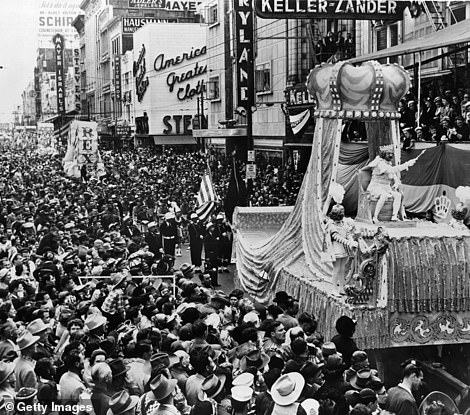
Mardi Gras in New Orleans did not begin with giant floats, marching bands, beads, and crowds lining St. Charles Avenue.
It developed over centuries—from European religious customs and colonial celebrations into a distinctly New Orleans tradition shaped by French, Spanish, African, Caribbean, Creole, and American influences.
Today, Mardi Gras is one of the world’s best-known celebrations, but its history begins long before the first parade rolled through the city.
What Is the Difference Between Carnival and Mardi Gras?
The terms are often used interchangeably, but they do not mean exactly the same thing.
Carnival is the entire season beginning on January 6, known as Epiphany or Twelfth Night. Mardi Gras, French for “Fat Tuesday,” is the final day of that season—the day before Ash Wednesday and the beginning of Lent.
Although Carnival officially begins January 6, the large traditional parade season usually builds during the final two weeks before Mardi Gras Day. Smaller parades, balls, parties, and neighborhood celebrations may begin earlier.
Why Does Mardi Gras Change Every Year?
Before Christianity: Older Roots of Carnival
Long before Mardi Gras reached New Orleans, people celebrated seasonal festivals with feasting, costumes, public revelry and temporary reversals of ordinary social rules. Ancient Roman festivals such as Saturnalia are often cited as possible influences on customs that later appeared in European Carnival.
With the spread of Christianity, Carnival developed into the celebration immediately preceding Lent—a final period of feasting and enjoyment before the traditional forty-day season of fasting and religious observance. The exact connection between ancient pagan festivals and modern Carnival is debated, but many of the themes of feasting, disguise and turning everyday life upside down are much older than Mardi Gras itself. (Smithsonian Magazine)
Mardi Gras Comes to Louisiana
Mardi Gras developed from European pre-Lenten celebrations that allowed people to feast and celebrate before the fasting and religious observances of Lent.
The tradition traveled to North America with French explorers and settlers.
On March 3, 1699, Pierre Le Moyne d’Iberville and his expedition reached an area near the mouth of the Mississippi River, approximately 60 miles south of the future site of New Orleans. Because it was Mardi Gras Day, the expedition named the location Point du Mardi Gras. (HISTORY TV Nederland)
New Orleans was not founded until 1718, and historians continue to debate whether Louisiana or Mobile, Alabama, can claim the earliest organized North American Mardi Gras celebration. What is clear is that French settlers brought Carnival customs to the Gulf Coast, where they began developing their own local character. (HISTORY TV Nederland)
Early Mardi Gras Celebrations in New Orleans
During the colonial period, Carnival celebrations included masked balls, private dinners, street revelry, and informal processions.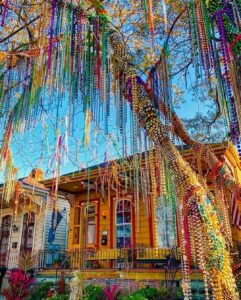
Spanish authorities sometimes restricted masking and public celebrations because they feared disorder and the freedom that anonymity gave participants. Despite those restrictions, Carnival continued to grow after Louisiana became part of the United States. (Louisiana State Museum)
By the 1830s, costumed maskers traveled through New Orleans on foot, horseback, and in carriages. In 1837, a group of costumed revelers participated in what is generally described as the city’s first documented Mardi Gras procession. These early celebrations were lively but largely unorganized and sometimes became disorderly. (HISTORY TV Nederland)
Comus Creates the Modern Mardi Gras Parade
The most important turning point came in 1857.
Six men originally from Mobile who were living in New Orleans organized the Mistick Krewe of Comus. The word “krewe,” a stylized spelling of “crew,” became the term used for the organizations that produce Mardi Gras parades and balls. (64 Parishes)
Comus presented an organized nighttime procession with a central theme, elaborate costumes, floats, torchbearers, and a private ball afterward. Its first parade was based on characters from John Milton’s Paradise Lost.
Comus did not invent Mardi Gras in New Orleans, but it helped transform loosely organized street celebrations into the structured themed parades that became the model for modern Carnival. (Louisiana State Museum)
Flambeaux Light the Night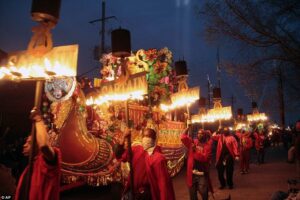
When the Mistick Krewe of Comus presented its first nighttime parade in 1857, New Orleans did not have the electric street lighting or illuminated floats we know today. The parade route was lit by flambeaux—large flaming torches carried alongside the procession. Early flambeaux carriers were enslaved Black men and free men of color, making the tradition an important part of both Mardi Gras history and the racial history of New Orleans. (New Orleans)
What began as a practical necessity soon became a performance. Carriers danced, twirled, and moved with the torches as they walked the route, and spectators began tossing them coins as tips. Even after electric lights made the torches unnecessary, the tradition survived. Some nighttime parades still feature flambeaux today, and spectators continue the custom of tipping the carriers—although dollar bills have largely replaced coins. (64 Parishes)
Rex and the Growth of Carnival
In 1872, the Rex Organization presented its first Mardi Gras Day parade.
Rex introduced a daytime procession and established a King of Carnival to symbolically rule over the celebration. The organization also helped establish several enduring Mardi Gras traditions, including the colors purple, green, and gold and the Carnival anthem, “If Ever I Cease to Love.” (Rex Organization)
As more krewes formed, Mardi Gras parades became increasingly elaborate. Organizations developed individual identities, secret rituals, royalty, parade themes, costumes, balls, and signature throws.
Beads, cups, doubloons, stuffed animals, decorated shoes, coconuts, purses, and other krewe-specific items eventually became part of the experience of attending a New Orleans parade. (Historic New Orleans Collection)
Bacchus Brings Celebrity Kings to Mardi Gras
Another major change came with the Krewe of Bacchus, founded in 1968. Bacchus helped usher in the era of the “superkrewe,” with enormous floats, larger memberships, and nationally known celebrities serving as its king.
The first Bacchus parade rolled in 1969 with entertainer Danny Kaye as king. Over the years, Bacchus kings have included Bob Hope, Jackie Gleason, Charlton Heston, Kirk Douglas, Henry Winkler, William Shatner, Harry Connick Jr., Drew Brees, Will Ferrell, Michael Keaton, James Gandolfini, Shaquille O’Neal, and many others. Jackie Gleason reigned as Bacchus in 1975. (CBS News)
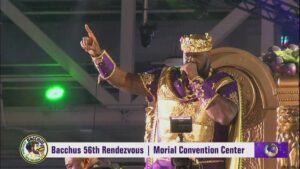
The idea of putting a nationally famous personality at the head of a Mardi Gras parade was unusual at the time and helped bring even greater national attention to Carnival in New Orleans. Bacchus also became known for spectacular oversized floats and helped reshape what visitors expected from a major Mardi Gras parade. (abcnews.com)
The Many Traditions of Black Carnival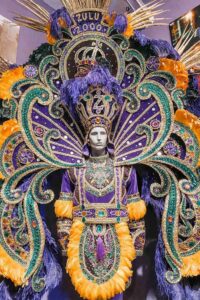
The history of New Orleans Mardi Gras cannot be told only through the city’s old-line parade organizations.
Black New Orleanians created their own Carnival institutions and traditions despite segregation and exclusion from many established krewes.
The Original Illinois Club, founded in 1895, helped establish an important Black Carnival ball tradition. The Zulu Social Aid and Pleasure Club grew from an informal neighborhood group into one of the city’s most celebrated Mardi Gras organizations. Zulu began parading in the early twentieth century and became famous for its decorated coconuts and community involvement. (64 Parishes)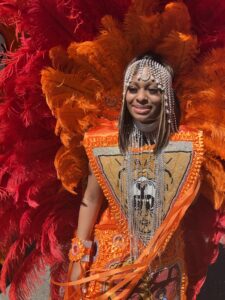
Black Masking Indian tribes, Baby Dolls, Skull and Bone gangs, walking clubs, brass bands, and Social Aid and Pleasure Clubs also helped shape the music, artistry, movement, and street culture of Mardi Gras.
These traditions reflect New Orleans’ African, Caribbean, Native American, and African American cultural connections and demonstrate that Carnival has never been just one celebration or one history. (National Park Service)
Pete Fountain and the Half-Fast Walking Club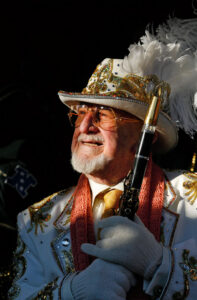
Not every Mardi Gras tradition involves giant floats. In 1961, legendary New Orleans clarinetist Pete Fountain and his friends founded the Half-Fast Walking Club, which became one of the city’s best-known Mardi Gras marching groups. (Mardi Gras New Orleans)
The club traditionally starts early on Mardi Gras morning at Commander’s Palace in the Garden District, then makes its way down St. Charles Avenue, through downtown and into the French Quarter, with musicians playing along the route. Pete Fountain led the group for decades, and the club continued after his death in 2016. (WDSU)
It is a good example of something important about New Orleans Carnival: Mardi Gras is not just the big parades. Walking clubs, neighborhood groups, musicians and people on foot are just as much a part of the tradition.

Mardi Gras Becomes a Worldwide Celebration
Over time, Mardi Gras grew from a largely local celebration into an event that attracts visitors and international attention.
Modern Carnival includes traditional krewes, superkrewes, neighborhood parades, walking groups, marching clubs, school bands, Black Masking Indians, social organizations, balls, concerts, family gatherings, and street celebrations.
Although many visitors think only of Bourbon Street, much of Mardi Gras is celebrated in neighborhoods and along family parade routes throughout the New Orleans area.
The celebration has continued through wars, epidemics, labor disputes, hurricanes, and other interruptions. Even during years when organized parades could not roll, New Orleanians found other ways to celebrate, demonstrating that Mardi Gras belongs to the people as much as it belongs to any parade organization. (Historic New Orleans Collection)
Mardi Gras Really Does End at Midnight
In New Orleans, Mardi Gras does not slowly fade away.
At midnight on Fat Tuesday, Mardi Gras officially ends and Ash Wednesday begins. In the French Quarter, police and city officials traditionally move down Bourbon Street, sometimes accompanied by mounted officers and patrol vehicles, sounding horns and directing revelers to clear the street.
One minute it is Mardi Gras. The next minute, Carnival is over. (WWL-TV)
The cakes, costumes, parades, and parties disappear—but only until January 6, when New Orleans begins the celebration all over again.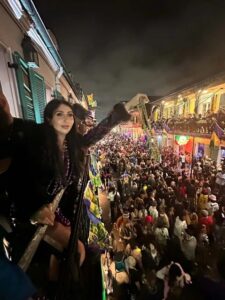
More Than a Parade
Mardi Gras is sometimes described as the greatest free show on Earth, but to New Orleanians, it is much more than a show.
It is families returning to the same parade location every year.
It is children sitting on ladders, marching bands coming down the avenue, neighbors sharing food, and generations passing traditions forward.
The parades have grown larger, the throws have changed, and millions of people have experienced Carnival—but its heart remains the same:
Mardi Gras brings people together.
Continue Exploring
Add links to:
- The Complete King Cake Guide
- What Is a Second Line?
- Why Does Mardi Gras Change Every Year?
- King Cakes Around the World
- Celebrate Mardi Gras
Sources for the published article
- Louisiana State Museum — Mardi Gras in Louisiana
- The Historic New Orleans Collection
- 64 Parishes — Mardi Gras in New Orleans
- Mardi Gras New Orleans — historical timeline and FAQs
- Rex Organization — organizational history and traditions
- National Park Service — New Orleans cultural traditions
- History.com — Mardi Gras history
- Local reporting from WWL-TV and WVUE on the traditional midnight Bourbon Street clearing