
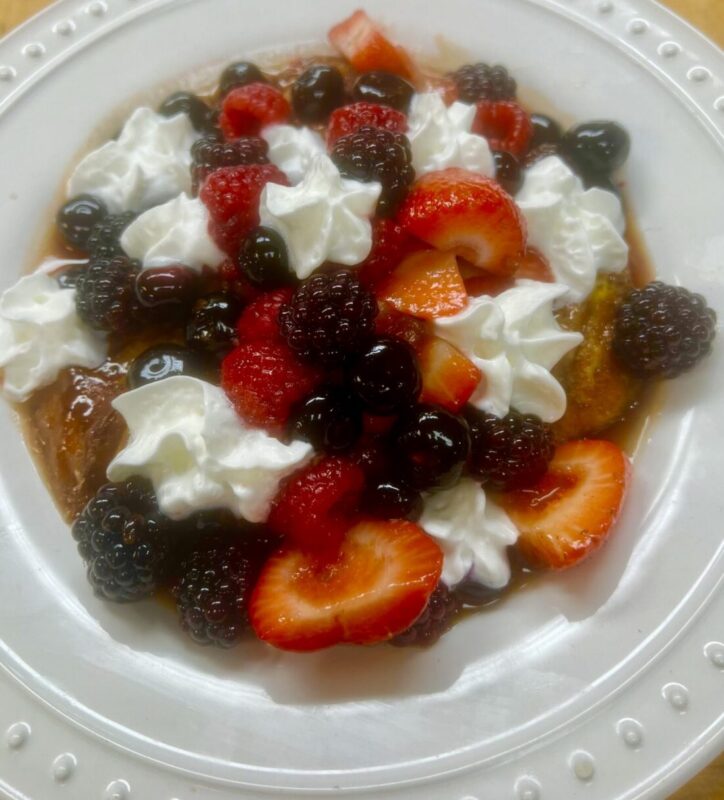
Makes enough for about 4 generous slices of King Cake.
- 4 large eggs
- 1 cup whole milk
- ¼ cup heavy cream (optional, but highly recommended)
- 2 tablespoons granulated sugar
- 1 teaspoon pure vanilla extract
- 1 teaspoon ground cinnamon
- ¼ teaspoon ground nutmeg
- ⅛ teaspoon salt
For Cooking
- 2 tablespoons butter
- 2 tablespoons olive oil or avocado oil
The equal parts butter and oil are one of those restaurant tricks. The butter gives flavor while the oil keeps it from burning.
We prefer olive oil or avocado oil instead of highly refined seed oils, but use whatever cooking oil you have on hand.
The goal is simply to keep the butter from burning while adding its rich flavor.
Fruit Topping
- 2 tablespoons butter
- 1½ cups sliced fresh fruit (strawberries, bananas, blueberries, raspberries, or a combination)
- 2–3 tablespoons maple syrup, honey, or Steen’s Cane Syrup
Or try a Nut toping
- ¼ cup toasted pecans
- ¼ cup sliced almonds
- ¼ cup pistachios
Finish with one or more of the following:
- Whipped cream
- Powdered sugar
- Caramel drizzle
INSTRUCTIONS:
Slice the King Cake
Instead of cutting straight down through the cake, slice it on a slight angle. This creates a larger surface area so the King Cake absorbs more custard while still holding together.
Make the Custard
Crack the eggs into a bowl and add the sugar, cinnamon, nutmeg, and vanilla.
Whisk everything together until the sugar is completely dissolved.
Warm the milk in a saucepan until it is JUST WARM. Do not let it boil.
Slowly pour the warm milk into the egg mixture while whisking constantly. Adding the milk gradually keeps the eggs from cooking and creates a smooth custard.
The Pan
Heat a large sauté pan or skillet over medium-high heat. Add equal parts butter and olive oil (or avocado oil). Once the butter begins to sizzle, reduce the heat to medium before adding the soaked King Cake.
The oil raises the butter’s smoke point, allowing you to enjoy the rich flavor of butter without it burning.
Use a pan that’s large enough so each slice has plenty of room. Crowding the pan lowers the temperature, which can make the French toast soggy and more likely to stick.
Soak the King Cake
While your pan is heating, completely submerge each slice of King Cake in the custard.
Lift the slice from the custard and allow the excess to drip off for several seconds. The slice should be well soaked, but not dripping.
Cook the French Toast
When the butter begins to sizzle, carefully place the soaked King Cake into the pan.
Cook for about 3–4 minutes on the first side.
Lift a corner with a spatula to check the color. When it is golden brown—similar to a perfectly cooked pancake—flip it over and cook the second side until golden.
Make the Fruit Topping
Remove the French toast from the pan.
Add another tablespoon of butter and allow it to melt until it begins to lightly brown.
Add a handful of sliced strawberries, bananas, blueberries, raspberries, or any combination you like.
Toss the fruit for about a minute, then drizzle in maple syrup, honey, or authentic Steen’s Cane Syrup. Continue cooking just until everything is tossed in warm syrup, not cooked through.
Spoon the warm fruit over the French toast.
Finish It Off
Top your King Cake French Toast with your favorite finishing touches:
- Whipped cream
- Powdered sugar
- Caramel drizzle
- Toasted pecans
- Sliced almonds
- Pistachios
Serve warm and enjoy!
Don’t Forget the Baby!
Before slicing your leftover King Cake, remember to remove the King Cake Baby if it hasn’t already been found. It makes a wonderful keepsake—but not a very tasty breakfast!
King King Cakes Tips:
#1 We actually prefer using King Cake that’s one or two days old. Fresh King Cake is delicious on its own, but slightly stale King Cake soaks up the custard better and makes incredible French toast with a crisp outside and a soft, custardy center.#2 Warm the milk before making the custard. A lukewarm custard soaks into the King Cake much more quickly than one straight from the refrigerator. Just be sure the milk is warm—not hot—so it doesn’t cook the eggs.
#3 You aren’t trying to cook the fruit. You’re simply warming it and coating it with the butter and syrup. The fruit should stay fresh, colorful, and slightly firm—not cooked down into a mushy topping.